
Delhi chokes again: Farm fires are only part of severe air pollution crisis
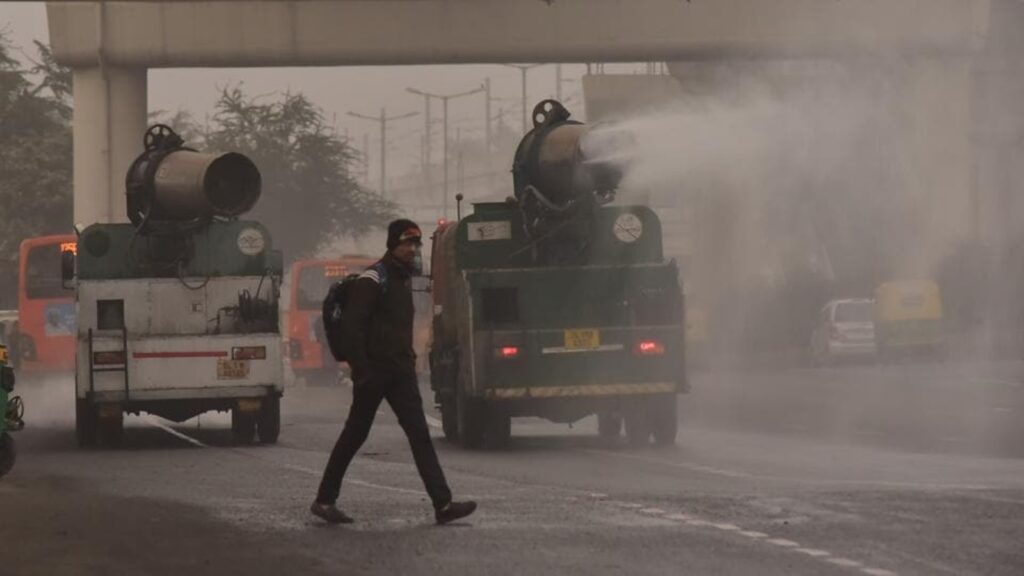
New Delhi – Delhi is gasping under toxic air once again. Data from the Central Pollution Control Board (CPCB) shows that the city’s 24-hour average Air Quality Index (AQI) jumped sharply from 130 on October 1 to 428 by November 11. By November 26, it fell slightly to 327, but it still remained in the ‘Very Poor’ category, highlighting the severity of the crisis.
Farm fires in Punjab and Haryana often attract blame for Delhi’s smog. However, the Ministry of Earth Sciences’ Decision Support System (DSS) shows a more nuanced picture. In early October, stubble burning contributed almost nothing to the capital’s pollution. By October 17, it rose to 2.62%, coinciding with AQI crossing 250. In November, the contribution peaked on November 12 at 22.47%, as the AQI soared to 418, classified as ‘Severe’. Between November 18 and 20, farm fire contributions fluctuated between 5.4% and 2.8%, yet the AQI stayed above 325. Clearly, farm fires amplify pollution during peak smog days, but they do not account for the entire problem.
Other sources play a larger role. DSS data reveals that surrounding cities, including Gautam Buddha Nagar, Gurgaon, Karnal, and Meerut, contribute 29.5% of Delhi’s toxic air. Vehicular emissions add 19.7%, residential sources 4.8%, peripheral industries 3.7%, and construction dust 2.9%. Alarmingly, unknown sources account for 34.8%, posing a major challenge for mitigation. Experts note that pollution cannot be fully controlled without identifying and addressing these unknown contributors.
The AQI snapshot across the city on November 26 at 4 PM shows dangerous levels everywhere. Rohini registered 368, Jahangirpuri 365, and Wazirpur 369. Even relatively cleaner zones like Dilshad Garden (259) and Mandir Marg (231) far exceeded the safe limit of 50. These readings indicate that the air quality crisis is widespread, affecting all parts of the city.
Experts emphasize that Delhi’s air pollution is a complex mix of regional emissions, vehicular exhaust, industrial activity, and unexplained sources. They warn that farm fires alone cannot explain the persistent smog that chokes the city every winter. Without a coordinated strategy that involves surrounding states, transportation authorities, and industry regulators, Delhi will continue to face seasonal health hazards.
Authorities have urged a multi-pronged approach. Measures include stricter monitoring of industrial emissions, better enforcement of vehicular pollution standards, promotion of clean fuel usage, and regional collaboration to reduce stubble burning. Environmentalists also call for innovative solutions to track unknown pollution sources, arguing that real-time data can guide effective interventions.
In short, Delhi’s air crisis is not seasonal alone. It reflects systemic challenges that require urgent action. As the capital enters peak winter, residents remain exposed to dangerously high pollution levels. Coordinated efforts across states and sectors remain the only solution to prevent the city from turning into a gas chamber every year.
The situation demands immediate attention, as unchecked pollution threatens public health, the economy, and overall urban sustainability.