Delhi bomber Dr Umar Nabi’s Pulwama home blown up in controlled operation
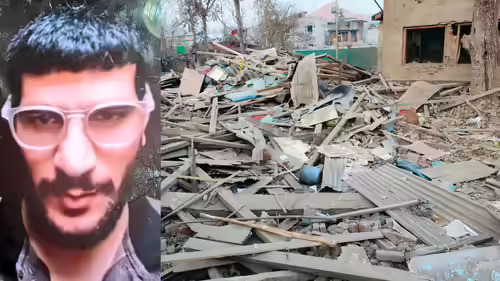
Pulwama – Security forces demolished the Pulwama home of Dr Umar Nabi on Friday during a controlled explosion. They used an IED to destroy the house as part of the probe into this week’s Red Fort blast. The operation began late Thursday night and continued into early Friday morning.
Investigators said they traced the Hyundai i20 that exploded near the Red Fort on Monday to Dr Umar. The blast killed 13 people and injured more than 20. Officials stated that Umar likely drove the vehicle, though they continue to examine his exact role. His identity was confirmed after DNA samples from the blast site matched those of his mother.
Soon after the attack, Jammu and Kashmir Police launched a series of overnight raids. They arrested six people, including three of Umar’s family members. Officials said Umar had maintained contact with two Kashmir-based doctors linked to the recently busted Faridabad terror module. That module involved the seizure of 2,900 kilograms of explosives.
Security agencies described Umar as a once-promising doctor who shifted toward radical ideology over the last two years. They found he had joined several extremist groups on encrypted platforms. He reportedly used apps like Threema and Signal to communicate with Dr Muzammil Ahmad Ganaie and Dr Shaheen Shahid. Investigators said the trio coordinated their alleged operation using these channels.
Police said the group collected more than ₹26 lakh in cash and handed it to Dr Umar to finance their plans. According to the investigation, Umar used part of the money to buy about 26 quintals of NPK fertiliser from suppliers in Gurugram, Nuh, and nearby districts. NPK, combined with other chemicals, forms a key component of many improvised explosive devices.
Sources told PTI that the network included around eight suspects preparing to split into pairs. The group allegedly planned to execute coordinated blasts across four cities. Officials said the Pulwama demolition marked a key step in disrupting the wider network and securing critical evidence.
As the investigation progresses, security agencies continue to track digital footprints, financial trails, and communication records. They said the Red Fort blast reflects a dangerous shift toward smaller, decentralised terror cells using encrypted technology and locally sourced materials.
Authorities in Delhi and Jammu and Kashmir have tightened surveillance across sensitive areas. They said the probe will now focus on identifying secondary cells, handlers, and potential safe houses connected to the suspects.
With pressure mounting, officials emphasised the need for rapid coordination between state and central agencies. They said the findings will shape counter-terror strategies in the coming months as India confronts evolving security threats.