Delhi artificial rain: Cloud seeding test done, showers likely before 7 pm
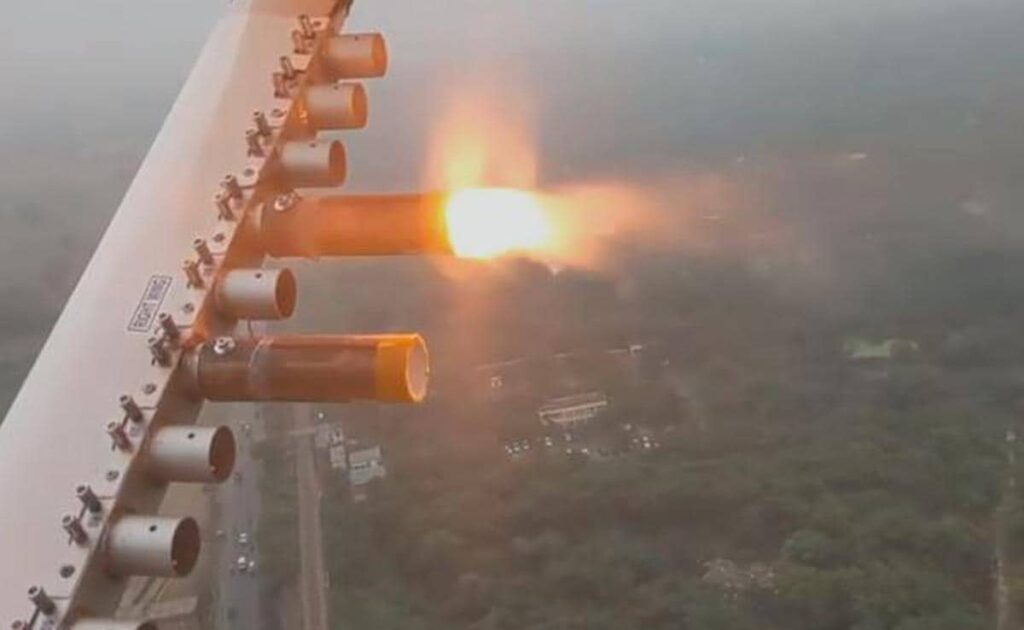
Delhi witnessed a major step toward tackling its air pollution crisis on Monday. A cloud seeding aircraft released special particles over select areas, marking the city’s first successful trial this season. Soon after the operation, the plane flew toward Meerut for the next phase. Officials expect light showers in parts of the national capital before 7 p.m.
The operation comes amid rising pollution levels after Diwali. Thick smog continues to choke Delhi and its neighboring regions, pushing the Air Quality Index (AQI) into the “very poor” zone. Despite Stage 2 of the Graded Response Action Plan (GRAP) being in effect, the city’s air quality has shown little improvement.
Cloud seeding aims to produce artificial rainfall by spraying moisture-rich clouds with chemical particles such as silver iodide or salt compounds. These particles act as nuclei, helping small droplets merge into larger ones that can trigger rain. The method, though expensive, has offered short-term relief in other polluted cities worldwide.
Before this main trial, Delhi had tested the process in the Burari area. However, the attempt failed due to low humidity levels, which stood below 20 percent. Scientists said at least 50 percent atmospheric moisture is required to generate rainfall through cloud seeding. With better weather conditions this time, officials expressed optimism about achieving visible results.
The Delhi government and the Indian Institute of Technology (IIT) Kanpur signed a memorandum of understanding on September 25 to conduct five such trials. These efforts form part of Delhi’s wider plan to curb air pollution and restore breathable air in the region.
Sources said officials are already reviewing the first trial’s impact and may approve a second round later today. “The moisture levels are favorable, and wind conditions look stable,” a senior official said. “We will take a call depending on how the first operation performs.”
If successful, artificial rain could temporarily wash down pollutants and offer some relief to residents struggling with burning eyes and breathlessness. Environmental experts, however, cautioned that the measure provides only short-term relief. They urged long-term reforms in emission control, stubble management, and public transport.
Meanwhile, parts of Delhi reported slight drizzle late in the afternoon, fueling hopes that the experiment might be working. Commuters welcomed the news as traffic cameras captured hazy skies turning slightly clearer in some stretches of central Delhi.
The cloud seeding mission represents a collaboration between science and governance aimed at easing one of India’s worst air pollution phases. As officials await confirmation of measurable rainfall, Delhiites are keeping an eye on the skies, hoping nature and technology together bring long-awaited respite.
By evening, the aircraft will complete its Meerut run. If conditions remain supportive, Delhi could see another artificial rain trial later tonight — a rare experiment in the fight against toxic air.