Border tension escalates: Pakistan and Afghanistan trade heavy fire after failed talks
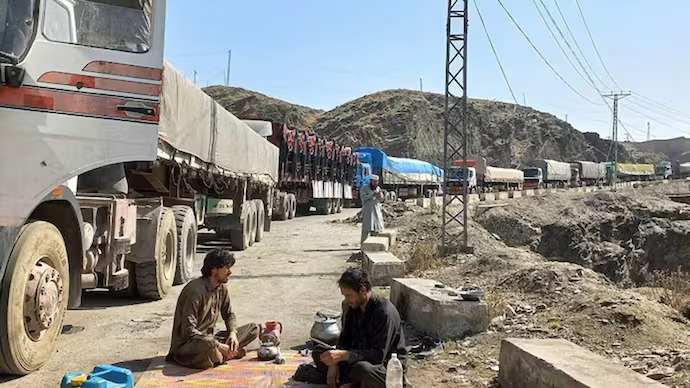
Pakistan and Afghanistan entered another volatile phase on Friday night as both sides exchanged heavy fire along the border. The clash erupted just days after peace talks collapsed, pushing the already fragile relationship into deeper uncertainty. Officials on both sides confirmed the firing but reported no casualties.
The latest confrontation began in the Spin Boldak region of Kandahar. Afghan Taliban spokesman ज़बीहुल्लाह मुजाहिद claimed Pakistan initiated the strikes. He said Afghan forces responded immediately. Pakistan rejected this account. Its government accused Afghan troops of launching “unprovoked firing’’ near the Chaman border. Pakistani prime minister’s spokesman, Mosharraf Zaidi, said Pakistan will defend its sovereignty and protect its people. He stressed that the government remains alert.
The timing of the clash raised fresh concerns. It came only two days after both countries wrapped up another round of talks. Negotiators met earlier in Saudi Arabia after previous sessions in Qatar and Turkey. They aimed to ease tension following October’s deadly confrontations. However, the discussions ended without a breakthrough. Both governments repeated their commitment to a fragile ceasefire, but neither side resolved key disputes.
Now, the border once again faces rising threats. Pakistan continues to claim that militants based in Afghanistan attack its territory. It links several recent suicide bombings to Afghan nationals. Islamabad argues that Kabul must act against groups crossing the border. Afghanistan rejects these allegations. Kabul says Pakistan cannot hold Afghanistan responsible for its internal instability. Afghan officials call the accusations politically motivated.
The tension goes back months. October saw some of the worst violence since the Taliban took power in 2021. Those clashes killed dozens and created a serious diplomatic setback. Since then, both countries have struggled to rebuild trust. Each incident widens the gap further.
Friday’s exchanges add a new layer of uncertainty. The border area remains sensitive because thousands of people cross it daily for trade and family visits. Any escalation disrupts movement and stirs fear among residents. Traders in Chaman and Spin Boldak already report declining activity. Many worry about more closures if violence continues.
Despite the risks, neither side shows signs of stepping back. Pakistan wants stronger guarantees from Kabul against cross-border militancy. Afghanistan wants Islamabad to acknowledge the changing regional environment after the Taliban takeover. Both demand concessions, but neither appears ready to compromise.
The failed talks underscore the difficulty of resolving long-standing disputes. Regional powers like Saudi Arabia, Qatar and Turkey continue to mediate, yet progress remains slow. Their involvement shows how deeply the conflict affects wider regional stability.
As the weekend begins, both nations face growing pressure to avoid a new cycle of violence. Civilians in border districts fear another deadly confrontation. Diplomats urge restraint. For now, Pakistan and Afghanistan stand locked in another tense standoff—one that threatens to derail any hope of peace unless both sides return to the table with real intent.