BJP ends Thackerays’ 28-year rule, secures historic control of Mumbai’s BMC
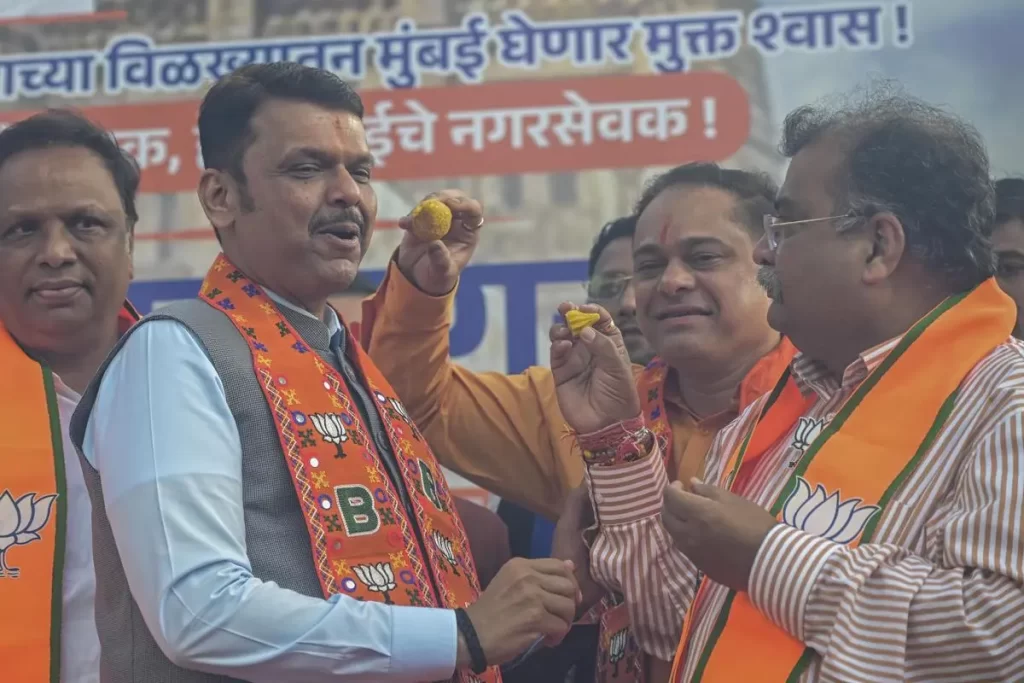
Mumbai witnessed a political shift as the BJP–Shiv Sena (Shinde faction) alliance clinched a decisive victory in the Brihanmumbai Municipal Corporation elections. As a result, the BJP broke the Thackeray family’s uninterrupted 28-year dominance over Asia’s richest civic body.
The counting confirmed a clear mandate for the ruling Mahayuti. The BJP alone won 89 out of 227 wards, surpassing its earlier best performance of 82 seats in 2017. Meanwhile, its ally Shiv Sena secured 29 seats. Together, the alliance reached 118 seats and crossed the majority mark of 114 comfortably.
This outcome strengthened Chief Minister Devendra Fadnavis’s standing in Maharashtra politics. He led the campaign aggressively. He focused on governance and infrastructure. Consequently, voters rewarded his development pitch.
On the other hand, Eknath Shinde’s faction struggled in traditional Shiv Sena bastions. Even though many former corporators stayed loyal to him after the party split, his group failed to convert that into votes. The faction managed only 29 seats, which exposed weak grassroots support in Mumbai.
In contrast, Uddhav Thackeray’s Shiv Sena captured 65 seats. Although the tally dropped from the united Sena’s 84 seats in 2017, Uddhav retained a strong second position. Therefore, the results showed that the Thackeray legacy still holds emotional value among sections of voters.
During the campaign, Uddhav and Raj Thackeray reunited after years of rivalry. They revived the Marathi identity plank. They accused the BJP of threatening Mumbai’s cultural roots. However, Fadnavis countered swiftly. He dismissed the charge as fear politics. He assured voters that Marathi pride and development can coexist.
Raj Thackeray’s MNS contested 52 seats but secured only six wins. This weak performance diluted the opposition’s impact. Moreover, the Sharad Pawar-led NCP faction won just one seat, which further fragmented the anti-BJP vote.
After the victory, BJP leaders credited Hindutva and governance for the sweeping result. Minister Nitesh Rane described the verdict as support for pro-Hindu policies. Similarly, Fadnavis said development and ideology go hand in hand. He promised that Mumbai would soon get a Marathi mayor from the Mahayuti.
Meanwhile, the Congress fought independently despite alliances at the state level. The party aimed to test its own strength. However, it managed only 26 seats. Its ally VBA secured eight. Together, they failed to challenge the dominant alliance.
Interestingly, AIMIM improved its presence. The party increased its tally from two seats in 2017 to eight this time. This growth highlighted shifting minority voting patterns in select wards.
Overall, the BMC verdict redrew Mumbai’s political map. The BJP-led Mahayuti emerged as the dominant urban force. The Thackerays remained relevant but lost control. Most importantly, Devendra Fadnavis strengthened his leadership and positioned himself as the central figure in Maharashtra’s political landscape.