Bengaluru metro to reach 175 km by December 2027, says DK Shivakumar
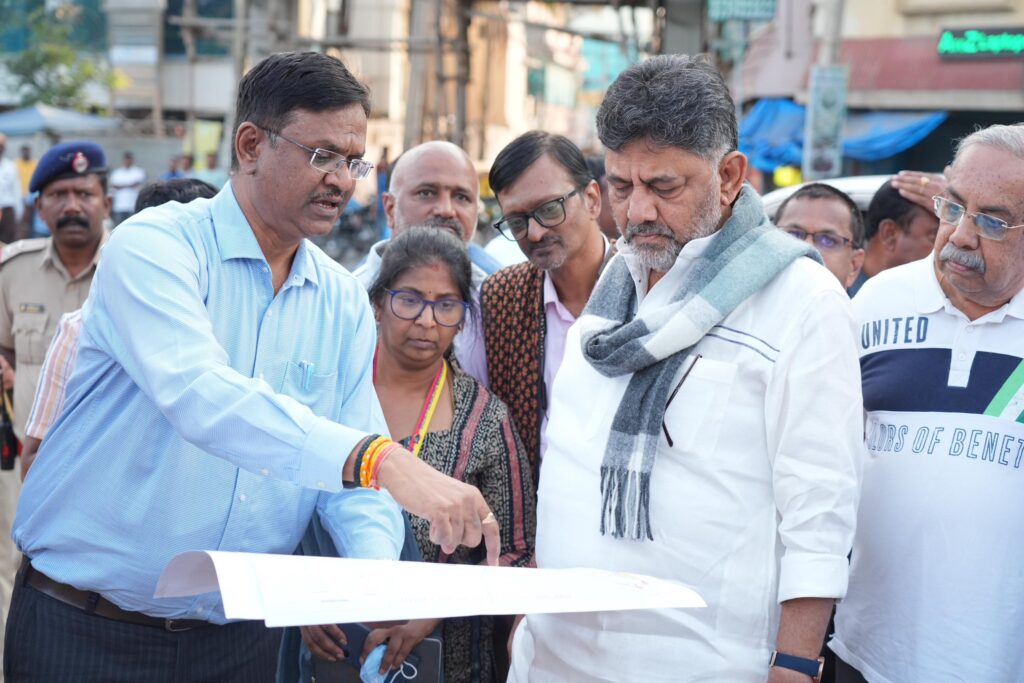
Bengaluru’s metro network will see a major expansion over the next three years. Deputy Chief Minister DK Shivakumar on Monday said the state government plans to extend Namma Metro to 175 kilometres by December 2027. The move aims to ease traffic pressure and improve public transport across the city and its outskirts.
Shivakumar shared the update after reviewing metro projects at the Bengaluru Metro Rail Corporation Limited office. He holds charge of Bengaluru development. He said the city currently operates 96 kilometres of metro lines. However, that figure will rise steadily through phased additions.
First, the government plans to add 41 kilometres by December 2026. Next, it will commission another 38 kilometres by December 2027. This phase includes the long-awaited metro link to Kempegowda International Airport. With these additions, Bengaluru will operate a 175-kilometre metro network.
Shivakumar highlighted recent progress to underline the pace of work. He said the government commissioned the 24-kilometre Yellow Line after coming to power. According to him, around one lakh commuters now use the line every day. More importantly, traffic police data shows a 30 percent drop in congestion around Electronic City since the launch.
Meanwhile, the government has turned its focus to Metro Phase 3. Shivakumar said authorities will float tenders next month for nearly 100 kilometres of new metro lines. The estimated cost stands at about ₹25,000 crore. This phase marks a significant shift in design and scale.
Notably, Phase 3 includes 42 kilometres of double-decker corridors. These structures will carry metro lines on one level and road traffic on another. Shivakumar said India has never built such a long double-decker metro corridor before. He added that planners will construct the entire stretch as an elevated corridor.
On funding, Shivakumar outlined the financial roadmap. He said the Japan International Cooperation Agency will provide loans worth ₹15,600 crore. In addition, the government will invite tenders in January for elevated corridor projects worth around ₹9,700 crore. He stressed that funding arrangements remain on track.
At the same time, the expansion will push metro connectivity beyond the city core. Shivakumar said new lines will extend toward Nelamangala, Magadi, Tavarakere, Hosakote, and Bidadi. These areas see heavy daily traffic and growing residential development. Therefore, officials aim to integrate them into the metro grid.
He also spoke about station planning. The government is working to finalise land for a metro station near Tavarakere. Shivakumar pointed out that traffic from Hassan passes through this area. A metro station there could ease pressure on key roads.
However, he acknowledged challenges. Land acquisition remains a hurdle at several locations. Court cases and dense traffic conditions often slow progress. Still, Shivakumar said the government continues to resolve issues through coordination and legal processes.
On contractor participation and costs, he struck a firm note. Shivakumar said the state will follow the agreed cost-sharing model. He added that the government will not compromise on financial discipline or project timelines.
Overall, the metro expansion reflects Bengaluru’s growing transport needs. Rapid urban growth has strained roads and increased commute times. Through phased metro development, the government aims to offer a reliable alternative. If timelines hold, Bengaluru will run one of India’s largest metro networks by the end of 2027.