SC tells army officer: Personal faith cannot override military discipline
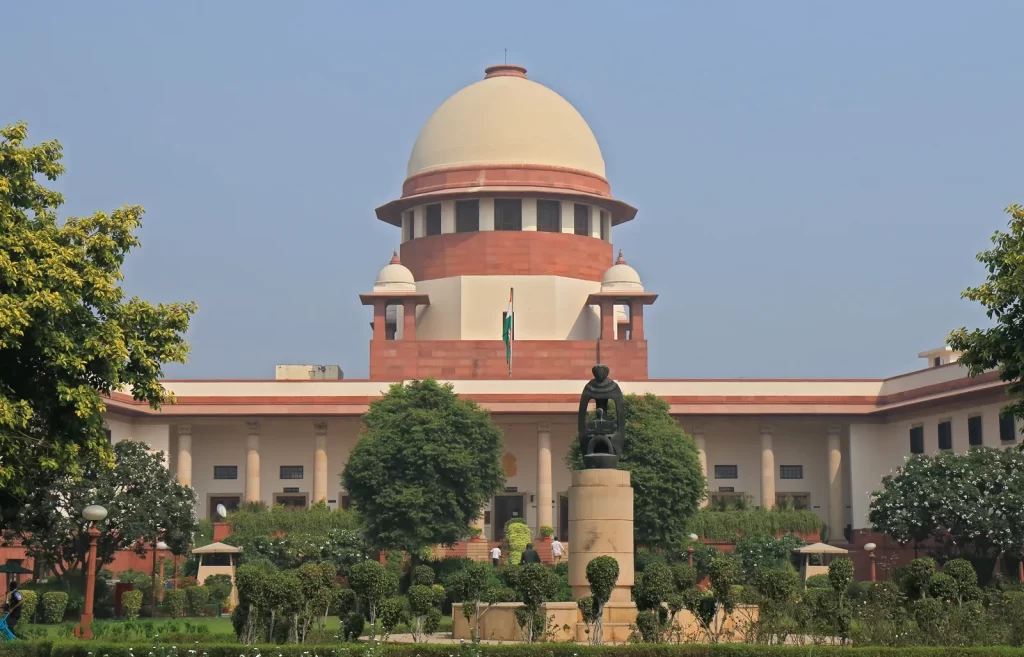
New Delhi – Supreme Court drew a clear line between personal faith and military discipline. The court said soldiers must place collective ethos above individual beliefs. It delivered this message while hearing the appeal of Samuel Kamalesan, a Christian officer who refused to enter the sanctum sanctorum of his regiment’s sarv dharm sthal.
Chief Justice of India Surya Kant and Justice Joymalya Bagchi led the bench. They listened to his arguments but rejected every claim. They said the Army cannot run on personal interpretations of faith. They added that Kamalesan showed “religious ego” and created disrespect within his own troop.
The bench recalled his journey in the Army. Kamalesan joined the 3rd Cavalry regiment in 2017 as a Lieutenant. The regiment had Sikh, Jat and Rajput squadrons. He led B Squadron, which mainly had Sikh soldiers. According to the court, a troop leader must honour the beliefs of his men. Instead, they said, he insulted their sentiment by refusing to step into a structure that housed a gurdwara and a temple.
The bench spoke in a firm tone throughout. It said the officer ignored repeated instructions from his commanding officer. He even ignored a pastor who told him that entering the sarv dharm sthal would not violate his faith. The court noted this contradiction and said it exposed his rigid mindset.
Senior advocate Gopal Sankaranarayanan represented the officer. He argued that Kamalesan followed a monotheistic faith and feared being pushed into rituals forbidden by his religion. However, the bench dismissed this concern. It said the Army never asked him to perform any ritual. It only asked him to enter the common prayer space like every other soldier.
The bench then raised a crucial point. It said Article 25 protects only essential religious practices. It added that the officer failed to show that entering a multi-faith prayer space violated an essential feature of his faith. Therefore, his constitutional argument collapsed.
The court also criticised what it called strategic omissions in his petition. It said the document “cleverly drafted” the narrative and hid facts. The judges asked why he consulted a pastor if he had no objection to interfaith spaces. They said the contradiction weakened his case further.
The hearing then shifted to the larger idea of military cohesion. The court said the Army exists on unity, discipline and mutual respect. It stressed that personal assertions cannot disturb the balance of a troop. “If a troop leader shows this attitude, the outcome harms the entire unit,” the bench said.
Finally, the bench reached a clear conclusion. It said the officer cannot fit into the Army’s disciplined and secular structure. It called him “an absolute misfit.” The judges upheld the Delhi High Court’s May 30 order and dismissed the appeal without hesitation.
With this ruling, the Supreme Court placed discipline above personal interpretation and reaffirmed the secular fabric of the armed forces.