India rejects China’s Shaksgam claim as India Army Chief draws firm red lines

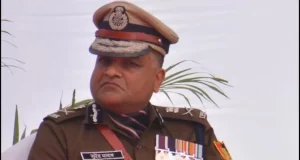
India has sharpened its stand on Shaksgam valley. On Tuesday, Army chief General Upendra Dwivedi rejected China’s territorial claim. He said India does not approve of any activity in the region. He also underlined that New Delhi treats the 1963 China-Pakistan Boundary Agreement as illegal.
First, the Army chief addressed the core dispute. He said Pakistan had no right to cede Indian territory to China. He stressed that India never accepted the agreement under which Islamabad handed over 5,180 square kilometres of land in Pakistan-occupied Kashmir. He spoke at his annual press conference ahead of the 78th Army Day on January 15.
Next, he responded directly to Beijing. China had claimed Shaksgam valley as its own and defended infrastructure construction there. General Dwivedi dismissed that position. He said India rejects any statement that supports the China-Pakistan Economic Corridor. He added that CPEC cuts through Indian territory under illegal occupation. He called the project unlawful.
Meanwhile, China doubled down on its claim. A Chinese foreign ministry spokesperson said Beijing had full rights to build infrastructure on its territory. She cited the 1960s boundary agreement with Pakistan. India rejected that logic outright.
Earlier, India’s external affairs ministry had also raised objections. The ministry said Shaksgam valley forms part of Indian territory. It said India never recognised the so-called boundary pact of 1963. Officials explained that the Shaksgam Tract lies north of the Karakoram watershed. Pakistan occupied the area after 1947 and later handed it to China. India continues to claim it as part of the former state of Jammu and Kashmir.
At the same time, General Dwivedi spoke about the wider China front. He said the situation along the northern borders remains stable. However, he stressed the need for constant vigilance. He said senior-level talks and confidence-building measures have helped ease tensions. He added that these steps have allowed grazing, medical camps, and routine activities to resume.
He also outlined India’s military posture. He said the Army maintains balanced and robust deployment along the Line of Actual Control. He said capability building and infrastructure work continue through a whole-of-government approach. He made it clear that readiness remains a priority.
Then, he referred to eastern Ladakh. The Army resumed patrolling in Demchok and Depsang in 2024 after a gap of more than four years. That move restored the ground situation to pre-April 2020 levels. He said this progress followed the final disengagement at Gogra-Hot Springs in September 2022. He noted that talks had stalled earlier but regained momentum later.
Since October 2024, both sides have worked to keep the borders calm. General Dwivedi said trust-building efforts continue. He said both armies want stability. He explained that any change in force levels depends on time, space, and resources. He added that forces must stay positioned to respond quickly when needed.
He also revealed new mechanisms. Two groups now handle the border issue. An expert group focuses on boundary delimitation. A working group handles boundary management. He said their guidelines will shape future developments.
In addition, the Army chief addressed Pakistan-sponsored terrorism. He said terror incidents have dropped to near zero after Operation Sindoor. However, he warned that eight terror camps remain active in Pakistan. He said two lie across the international border and six across the Line of Control. He said the Army tracks them closely and stands ready to act.
Finally, he reflected on Operation Sindoor. He said the operation showed India’s resolve and precision. He said India struck terror infrastructure decisively after the April 22 Pahalgam attack. He warned that any future misadventure will face a firm response.