India moves toward historic Rafale deal, plans to buy 114 Fighter Jets for Rs 3.25 lakh crore
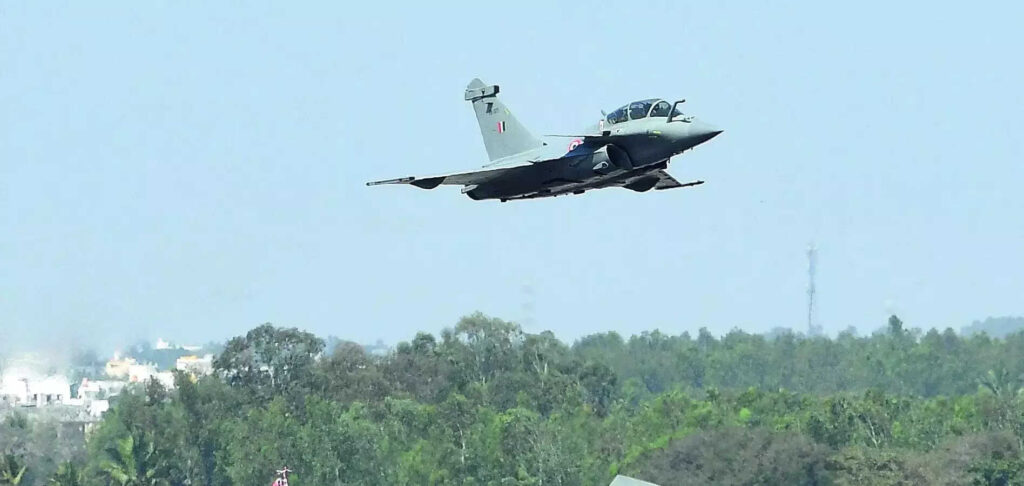
India is set to finalise its biggest-ever defence deal. The Defence Ministry is preparing to clear a Rs 3.25 lakh crore agreement to buy 114 Rafale fighter jets. Officials expect approval this week. The move comes ahead of French President Emmanuel Macron’s visit to New Delhi.
According to sources, the government wants to fast-track the process. It aims to strengthen the Indian Air Force’s combat strength. At the same time, it seeks deeper strategic ties with France.
Once cleared, the deal will mark a major milestone. It will become India’s largest weapons purchase to date. More importantly, it will support the “Make in India” initiative.
Under the agreement, India plans to manufacture nearly 100 jets locally. French firm Dassault Aviation will share advanced technology. Indian companies will join production. As a result, domestic defence manufacturing will receive a major boost.
Meanwhile, officials say the deal will expand India’s Rafale fleet significantly. India already operates 36 Rafale ‘C’ variants. The Air Force received the final aircraft in December 2024. These jets serve in two frontline squadrons. The Golden Arrows operate from Ambala. The Falcons fly from Hasimara in West Bengal.
In addition, India has ordered 26 Rafale ‘M’ naval variants. The Navy will deploy these jets on INS Vikrant and INS Vikramaditya. That deal, worth Rs 63,000 crore, includes trainers, logistics support, and maintenance facilities. Authorities expect deliveries by 2030.
Therefore, with the new order, India will emerge as one of the largest Rafale operators outside France.
Rafale jets already play a key role in India’s defence strategy. They have seen real combat. In May last year, they took part in Operation Sindoor after the Pahalgam terror attack. They also operated in Ladakh during border tensions.
During these missions, Rafales reportedly fired SCALP cruise missiles. These weapons can hit hardened targets over 250 kilometres away. They also carry Meteor air-to-air missiles. In addition, they use Hammer precision weapons and the advanced Spectra electronic warfare system.
Because of these capabilities, defence experts regard Rafale as one of the world’s most lethal multi-role fighters.
Meanwhile, India and France have strengthened industrial cooperation. In June last year, both countries signed four major technology transfer agreements. Dassault Aviation partnered with Tata Advanced Systems Limited.
Under this partnership, Tata will build key aircraft components in India. The company plans to set up a modern facility in Hyderabad. It will manufacture fuselage sections, rear shells, and central structures.
Production will begin in 2028. The target is two complete fuselages per month. Final assembly will continue in France, near Bordeaux. However, Indian participation will sharply reduce delivery timelines.
At the same time, the government continues to push for self-reliance. Officials want local firms to master complex aerospace technologies. They also want to reduce dependence on imports.
Furthermore, the Navy is preparing for the future. It plans to induct indigenous fifth-generation fighter jets. The Defence Research and Development Organisation is leading this project. These aircraft will complement the Rafale fleet in the long term.
Overall, the proposed Rafale deal reflects India’s evolving defence strategy. It combines immediate military needs with long-term industrial goals. It strengthens air power. It promotes domestic manufacturing. It deepens international partnerships.
If approved this week, the agreement will reshape India’s air combat capability for decades. It will also signal New Delhi’s commitment to security, self-reliance, and strategic stability.