From Trade to Tourism: Key takeaways from Putin’s 2-Day India visit
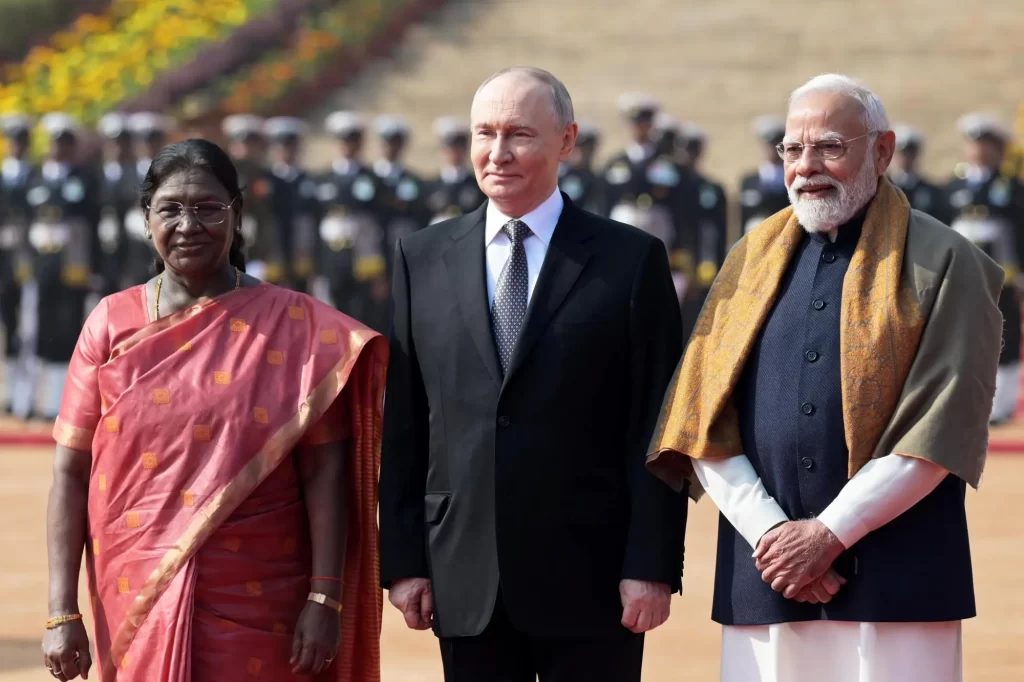
Russian President Vladimir Putin wrapped up his two-day India visit on Friday night after a packed schedule in New Delhi. He began the day at Rashtrapati Bhawan with a ceremonial welcome and ended it at a state banquet hosted by President Droupadi Murmu.
Between these two events, he met Prime Minister Narendra Modi, addressed a joint press briefing and attended a business forum. Throughout the visit, both leaders stressed deeper strategic cooperation and long-term stability in bilateral ties.
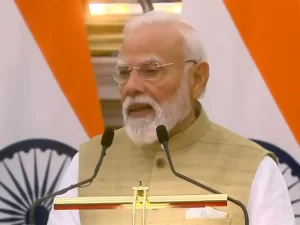
Putin’s trip came at a time of global tension, especially over the Ukraine war. Before their bilateral meeting, Modi set the tone. He said India stands “on the side of peace” and supports a peaceful resolution through dialogue. Putin responded by acknowledging India’s consistent focus on peace. He also highlighted strong ties in defence, space, artificial intelligence and other core sectors.
Later, at the 23rd Russia-India Summit, both leaders revisited the Ukraine issue. Modi again pushed for diplomacy, while Putin said Russia is working toward a peaceful outcome. Their statements reaffirmed India’s role as a bridge builder amid the conflict.
As the day progressed, the two sides shifted focus to connectivity and trade. India and Russia signed an MoU on cooperation in ports and shipping. They also agreed to intensify work on major transport corridors. These include the International North-South Transport Corridor, the Chennai–Vladivostok maritime route and the Northern Sea Route. The goal is simple: strengthen logistics, expand market access and build resilient supply chains.
At the joint press briefing, Modi announced a new long-term economic cooperation program that targets significant trade expansion by 2030. He said both countries want to elevate the partnership to new heights. To boost tourism, he also introduced a free 30-day e-tourist visa and a 30-day group visa for Russian travellers. This move aims to revive tourist flows that slowed after the pandemic.
Putin, meanwhile, addressed global concerns over energy supplies. He said Russia will keep fuel shipments to India “uninterrupted” despite pressure from Western countries. He called Russia a reliable supplier of oil, gas and coal for India’s fast-growing energy needs. His remarks signalled confidence in long-term energy cooperation.
At the business forum, Modi said talks on a Free Trade Agreement between India and the Eurasian Economic Union have started. Both leaders also said they want to push annual trade to USD 100 billion by 2030.
Earlier, Putin visited Rajghat and paid homage to Mahatma Gandhi. He laid a wreath, offered floral tributes and signed the visitors’ book, adding a symbolic moment to a diplomatically intense day.
Overall, the visit moved from peace talks to trade deals and then to tourism initiatives. It showed both nations want steady ties and practical cooperation as global geopolitics grow more complex.