Communist Party of China outreach to BJP and RSS, Congress flags timing deficit
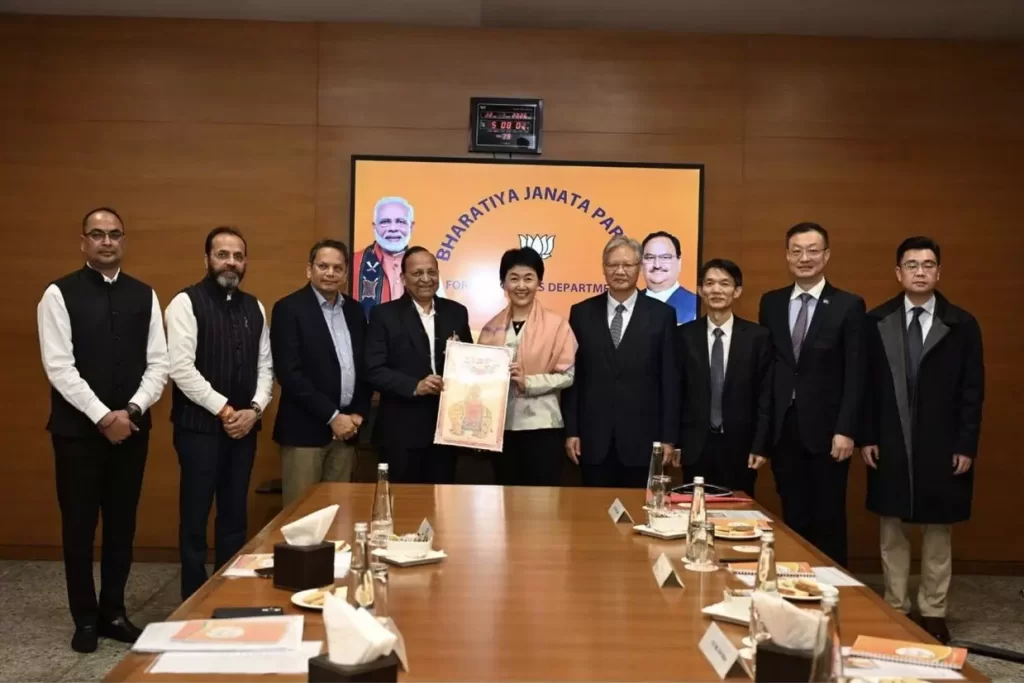
A delegation of the Communist Party of China met senior leaders of the BJP and the RSS in New Delhi this week. First, the visitors held talks at the BJP headquarters. Then, they met top functionaries of the RSS a day later. The meetings sparked sharp political reactions and renewed debate over India’s China policy.
The delegation came led by Sun Haiyan, vice-minister of the International Department of the CPC. Chinese Ambassador to India Xu Feihong joined the team. According to party sources, the visitors reached out to Indian organisations to expand dialogue and understanding.
BJP leaders described the interaction as routine and diplomatic. They said the two sides discussed ways to improve communication. They stressed that the visit followed recent high-level engagement between India and China. In particular, they cited Prime Minister Narendra Modi’s interaction with Chinese President Xi Jinping during the BRICS summit last year.
Arun Singh, BJP national general secretary, met the delegation along with Vijay Chauthaiwale, who heads the party’s foreign affairs cell. Singh later said the discussion focused on strengthening interaction between the BJP and the CPC. He avoided sharing operational details.
Soon after, the delegation met RSS general secretary Dattatreya Hosabale. An RSS functionary said the meeting remained a courtesy call. He added that the Sangh engages with people across ideologies and nations. He said the delegation wanted to understand the RSS viewpoint and organisational work. He also recalled similar visits after the BJP formed the government in 2014.
However, the Congress questioned both the timing and the intent. Party leaders raised concerns after reports surfaced about China staking claims over the Shaksgam Valley in Jammu and Kashmir. They said those reports emerged within hours of the closed-door BJP meeting.
Congress leader Pawan Khera led the attack. He said dialogue itself posed no issue. He argued that the problem lay in what he called BJP hypocrisy. He accused the ruling party of applying different standards to itself and its rivals.
Khera recalled how the BJP earlier targeted the Congress for signing a memorandum of understanding with the CPC. He said the BJP then framed the move as a threat to national security. Now, he said, the BJP sent mixed signals by hosting similar meetings while in power.
At the same time, Khera demanded transparency. He asked the Prime Minister and the BJP leadership to disclose what they discussed behind closed doors. He questioned whether those talks protected India’s national interests.
The Congress also linked the issue to border tensions. Khera referred to the Galwan Valley clash of June 2020. He accused the government of failing to respond firmly after the deaths of Indian soldiers. He alleged that China continued to alter facts on the ground along the Line of Actual Control.
Moreover, Khera flagged reports of Chinese infrastructure activity and map changes in disputed areas. He said China expanded military presence and created buffer zones. He argued that talk of restoring the status quo no longer matched reality.
On regional security, he cited claims that China aided Pakistan during sensitive military operations. He said such actions raised deeper strategic concerns.
Khera also attacked the government on economic policy. He said the BJP publicly discouraged Chinese goods while quietly easing restrictions on Chinese firms. He questioned approvals for companies earlier placed on watchlists.
Finally, he criticised the RSS meeting. He argued that non-state actors should not influence foreign policy. He claimed the RSS operates without public accountability.
The controversy now adds pressure on the government. It also sharpens political lines as India balances diplomacy, security, and domestic politics.