Budget session heats up: Opposition targets Mamata, Rijiju slams disruptions, Congress pushes for Trade Deal debate
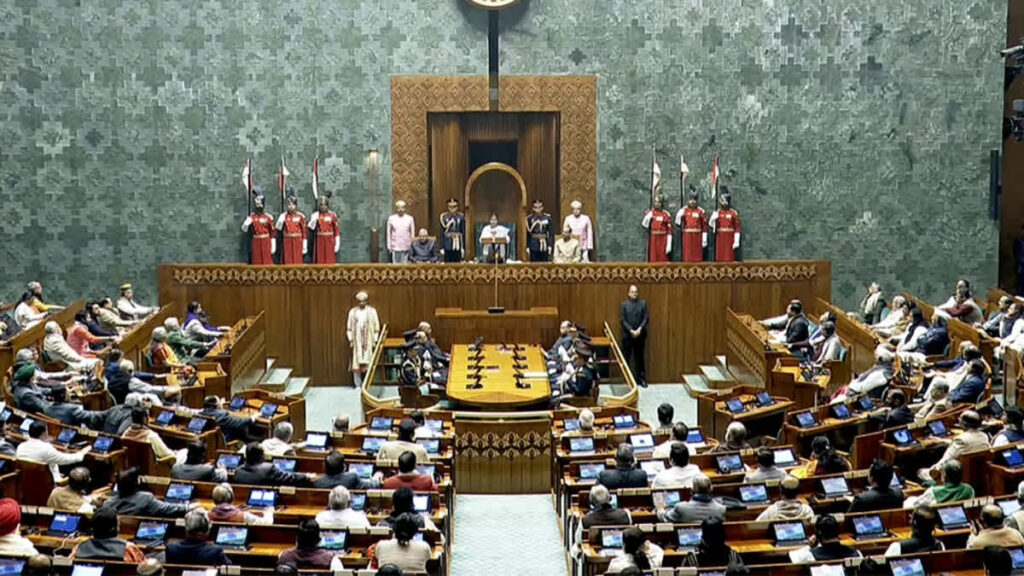
Parliament witnessed sharp political exchanges during the Budget Session on Tuesday. Leaders from across parties raised key issues. They questioned election processes. They challenged House conduct. They also demanded greater transparency in foreign policy.
As a result, the session began on a tense note. First, Leader of Opposition Suvendu Adhikari targeted West Bengal Chief Minister Mamata Banerjee. He accused her of weakening voter verification through the Supreme Court. He claimed that she wants elections without proper checks.
According to Adhikari, Banerjee seeks to dilute the Special Intensive Revision process. He said the move aims to rush polls. He argued that officials must update voter rolls before elections. He stressed that democracy depends on accurate lists. Therefore, he warned against shortcuts.
Adhikari stated that free and fair elections require strict verification. He accused the state government of compromising democratic standards. He also alleged that political interests drive the legal challenge. Meanwhile, he raised another issue.
He criticised Banerjee’s understanding of parliamentary procedures. He referred to her remarks on impeaching the Chief Election Commissioner. He questioned her grasp of the process.
Adhikari pointed out her long political career. He noted that she served as an MP seven times. He also highlighted her three terms as Chief Minister. Despite this, he said, she lacks clarity on impeachment rules.
He asked whether she knows the required number of MPs. He also asked whether she understands the stages involved. Through these remarks, he sought to corner the state leadership. Next, Union Minister Kiren Rijiju responded to disruptions in Parliament.
He addressed the issue through a post on X. He said rules apply equally to all members. He stated that no leader stands above Parliament. He included Rahul Gandhi in his remarks.
Rijiju criticised repeated interruptions in the House. He also criticised public statements that portray leaders as victims. He called this approach irresponsible.
Furthermore, he urged lawmakers to respect institutions. He asked them to honour the Chair. He stressed the need to protect parliamentary dignity.
At the same time, Congress leaders focused on policy debates. Congress MP Manish Tewari submitted an adjournment motion in the Lok Sabha. He sought a discussion on the India-US Trade Agreement. He asked the government to issue a formal statement.
Tewari argued that the agreement affects multiple sectors. He cited trade, energy, and foreign policy. He said such decisions need open debate. He insisted on transparency.
According to him, Parliament must remain informed. He said the public also deserves clarity. Therefore, he demanded time for a full discussion.
Meanwhile, Congress MPs held internal meetings.
They gathered ahead of floor proceedings. They reviewed strategy. They discussed speaking slots. They planned coordinated interventions. Their aim focused on presenting a united stand.
Party leaders said the meeting helped streamline positions. They also aimed to avoid mixed messaging. Through this exercise, Congress sought stronger presence in debates.
In the background, tensions between the Centre and opposition states continued.
Disputes over electoral reforms remained unresolved. Legal battles over voter verification shaped political narratives. At the same time, international agreements added pressure on the government.
As a result, the Budget Session turned into a platform for multiple confrontations.
On one side, opposition leaders questioned election integrity. On another side, ministers defended institutional discipline. At the same time, lawmakers demanded accountability on foreign policy.
These parallel debates reflected deeper political divisions.
Analysts noted that both sides used the session to send messages. The ruling side stressed order and procedure. The opposition highlighted transparency and fairness.
With more bills and debates ahead, confrontations may continue.
For now, Parliament remains a key battleground. Leaders use it to raise public concerns. They also use it to shape political narratives.
As the session progresses, parties will likely sharpen their positions. Voter verification, trade policy, and House discipline will stay in focus. The coming days will test cooperation and restraint across party lines.