
Day after Diwali, Delhi chokes under thick smog as AQI spikes
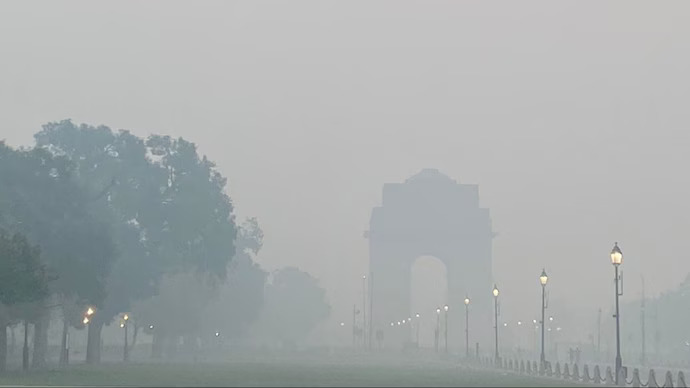
Delhi woke up to thick smog and toxic air on Tuesday morning, a day after Diwali celebrations. The city’s average Air Quality Index (AQI) at 5:30 a.m. stood at 346, placing it firmly in the “very poor” category. Most monitoring stations flashed red, warning of serious health risks for residents.
The national capital burst into fireworks on Sunday night after the Supreme Court allowed the use of “green” firecrackers. However, the celebrations led to a sharp dip in air quality. At 10 p.m. on Monday, 36 of Delhi’s 38 monitoring stations recorded “very poor” to “severe” levels. The thick layer of smoke hung over the city through the night, reducing visibility and causing breathing discomfort.
According to the Early Warning System for Delhi, several areas crossed the 400 mark on the AQI scale, entering the “severe” category. Nehru Nagar, Anand Vihar, and Jahangirpuri recorded some of the worst readings. Experts said the spike followed a familiar post-Diwali pattern driven by firecracker smoke, stubble burning, and traffic emissions.
The System of Air Quality and Weather Forecasting and Research (SAFAR) also noted a rise in PM2.5 and PM10 levels, key indicators of dangerous particulate pollution. The thick haze turned Delhi’s skyline grey and forced many residents to wear masks.
Environmental scientists blamed multiple factors. While the smoke from fireworks worsened Delhi’s air, stubble burning in Punjab and Haryana added to the pollution load. Vehicle emissions and construction dust further intensified the crisis. Calm wind conditions trapped pollutants near the ground, preventing dispersion.
Health experts urged residents to avoid outdoor exercise and limit travel to essential needs. They advised vulnerable groups—including children, the elderly, and people with respiratory diseases—to stay indoors until conditions improve. “Air quality below 200 is manageable, but above 300, prolonged exposure becomes harmful,” said Dr. Rajiv Sharma, a pulmonologist at AIIMS.
The AQI scale defines air quality as Good (0–50), Satisfactory (51–100), Moderately Polluted (101–200), Poor (201–300), Very Poor (301–400), and Severe (401–500). The higher the number, the more dangerous the air becomes.
NCR Fares No Better
Neighbouring cities in the National Capital Region (NCR) reported equally grim conditions. At 7 a.m., Noida and Ghaziabad both recorded AQI levels of 412, while Greater Noida touched 390. Gurgaon followed closely with 402, and Faridabad matched at 412. Even Meerut, farther away, registered a “very poor” 302.
According to the World Health Organization (WHO), safe air requires PM2.5 levels below 15 micrograms per cubic metre (24-hour average) and PM10 below 45. Delhi’s current pollution levels exceed those limits by more than tenfold.
Meteorologists expect the smog to linger for at least two more days as wind speeds remain low. The Delhi government plans to step up street cleaning and impose curbs on construction activity if pollution persists.
For now, Delhi continues to gasp for breath as post-Diwali pollution once again darkens its skies and endangers public health.