Red Fort Blast Case widens as NIA arrests key Umar-un-Nabi aide, total held rises to 9
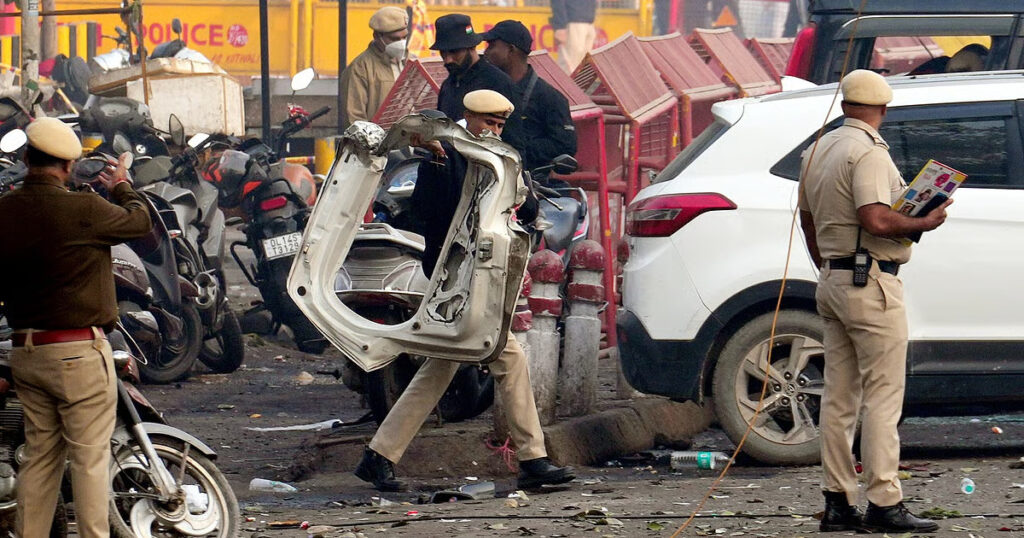
The Red Fort blast probe has taken a significant turn. On Thursday, the National Investigation Agency arrested a close aide of Umar-un-Nabi, the man who drove the car that exploded near Delhi’s Red Fort on November 10. With this arrest, the total number of accused in the case has climbed to nine.
The NIA identified the arrested man as Yasir Ahmad Dar. He hails from Shopian in Jammu and Kashmir. Investigators tracked him to Delhi and took him into custody. The agency booked him under provisions of the Unlawful Activities (Prevention) Act and the Bharatiya Nyaya Sanhita.
According to the NIA, Dar played an active role in planning the attack. Investigators say the blast formed part of a larger conspiracy linked to a so-called white-collar terror module. The explosion killed 15 people and injured several others, shaking the capital and raising serious security concerns around a key national monument.
Officials say Dar did not act alone. Instead, he stayed in constant touch with other accused. These contacts included Umar-un-Nabi, who died during the execution of the plot, and Mufti Irfan, whom the agency describes as a central conspirator. Investigators believe this network worked through layers of operatives to avoid early detection.
The agency claims Dar took an oath to carry out self-sacrificial operations. This detail, officials say, points to a high level of radicalisation. It also strengthens the case that the attack aimed to cause mass casualties and fear rather than symbolic damage alone.
Meanwhile, the NIA continues to widen its net. Earlier this month, teams conducted coordinated searches across Jammu and Kashmir and Uttar Pradesh. Officers seized digital devices, documents, and other materials that they believe link suspects to the conspiracy. Analysts within the agency are now examining these devices for communication trails and financial links.
Before that, the NIA had carried out searches at Al Falah University. Investigators consider the campus significant to the case. The agency has already named Dr Muzammil Shakeel Ganaie and Dr Shaheen Sayeed as prime accused. Officials suspect that educated professionals helped plan logistics, funding, and recruitment, giving the case its “white-collar terror” tag.
Search teams also raided locations in Faridabad, Haryana. These operations aimed to uncover safe houses, digital backups, and possible sleeper contacts. According to officials, each raid has helped piece together the structure of the module.
The Red Fort blast shocked the nation due to its location and timing. The historic complex remains a powerful symbol of India’s sovereignty. An attack in its vicinity triggered immediate alerts across Delhi and beyond. Security agencies tightened checks at major public sites soon after.
Since then, the NIA has worked closely with local police and intelligence units. Officials say coordinated information sharing helped track suspects who moved across states. They also credit digital surveillance and financial monitoring for recent breakthroughs.
With nine arrests so far, investigators believe they have disrupted the core of the network. However, they continue to probe possible foreign links and funding channels. The agency has signalled that more arrests could follow as analysis of seized material progresses.
For now, the latest arrest marks a crucial step. It strengthens the prosecution’s case and signals the NIA’s intent to dismantle the entire terror module behind the Red Fort blast.