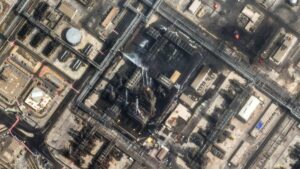
Sensex plunges over 2,000 points as oil shock and Gulf crisis shake markets
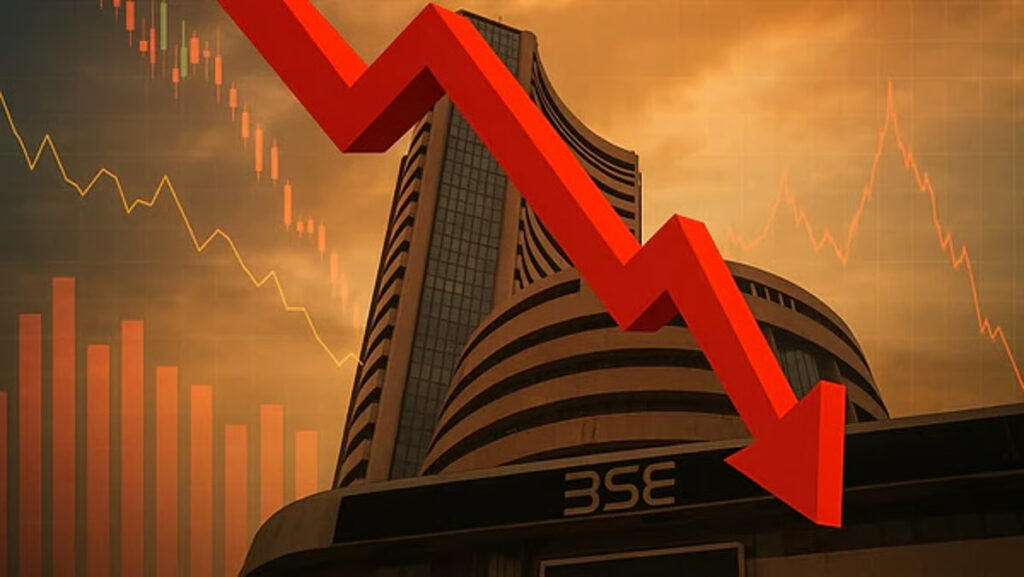
Indian stock markets opened the week with a sharp fall as global tensions triggered panic selling. Rising crude oil prices and escalating conflict in West Asia pushed investors into risk-off mode. As a result, benchmark indices on Dalal Street recorded heavy losses in early trade on Monday.
First, markets reacted to the surge in global oil prices. Brent crude climbed above 115 dollars per barrel after the Iran conflict involving Israel and the United States intensified. This sudden rise created fresh fears about inflation and economic pressure across major importing countries, including India.
Consequently, investors rushed to sell equities during the opening session. The S&P BSE Sensex dropped 2,444 points and slipped to around 76,474 in early trade. At the same time, the NSE Nifty50 fell nearly 730 points and declined to about 23,720 by 9:28 am. The steep fall reflected widespread concern about the economic impact of the geopolitical crisis.
Market experts pointed to the oil shock as the main trigger behind the sell-off. Investment strategist VK Vijayakumar explained that higher crude prices place heavy pressure on large oil-importing economies. According to him, prolonged conflict in West Asia could keep oil prices elevated and increase inflation risks.
He also noted that markets quickly factor such macroeconomic pressures into stock valuations. Higher energy costs usually push transportation, manufacturing, and logistics expenses upward. Eventually, companies pass some of these costs to consumers. Therefore, investors expect inflation to rise regardless of whether fuel price hikes reach retail consumers immediately.
Meanwhile, selling appeared across most sectors during the opening hour. However, a few large-cap stocks showed relative stability. Shares of Reliance Industries remained almost flat and slipped only marginally. Technology stocks also faced moderate pressure. Infosys lost around 0.89 percent, while Tech Mahindra and HCL Technologies declined slightly above one percent.
On the other hand, several stocks recorded steep losses. IndusInd Bank led the decline and dropped more than seven percent. State Bank of India also faced heavy selling and fell over five percent. Engineering giant Larsen & Toubro slipped nearly five percent. Meanwhile, Tata Steel declined more than four percent and automobile major Maruti Suzuki dropped over four percent.
This broad-based decline highlighted investor anxiety across sectors. Financial stocks suffered especially strong selling pressure because investors often reduce exposure to sensitive sectors during global uncertainty.
In addition, foreign institutional investors added to the volatility. Market observers noted that global funds resumed aggressive selling after a brief buying phase in February. According to analysts, uncertainty about the duration of the conflict remains the biggest concern for global investors.
At the same time, volatility indicators jumped sharply. India VIX, which measures market fear, surged more than 21 percent in early trading. This spike signaled growing nervousness among traders and institutional investors.
Broader markets also reflected the weakness. The Nifty Midcap 100 index dropped more than three percent, while the Nifty Smallcap 100 index also declined by a similar margin. The fall showed that selling pressure spread beyond large-cap stocks.
Sectoral indices painted the same picture. Auto stocks fell nearly four percent, while financial services stocks declined over three percent. Media, metals, and realty sectors also recorded steep losses. Banking stocks faced particularly heavy pressure, with PSU bank stocks dropping more than five percent.
However, analysts urged investors to keep a long-term perspective. Historical trends show that geopolitical shocks often trigger short-term volatility but rarely change long-term market fundamentals.
Experts also pointed to several sectors that could remain resilient despite the crisis. Domestic consumption segments such as banking, automobiles, telecom, and cement may face limited direct impact. In contrast, defence and pharmaceutical companies could benefit from global demand during uncertain times.
Therefore, analysts advised patient investors to stay calm during the turbulence. They suggested that long-term investors with strong risk appetite could gradually accumulate fundamentally strong stocks during market corrections.