Russia says India free to buy oil globally after US Trade Deal claims
New Delhi reaffirmed its independent energy policy on Wednesday. Moscow supported that stance. Russia said India remains free to buy crude from any country. It added that diversification reflects long-term policy, not political pressure.
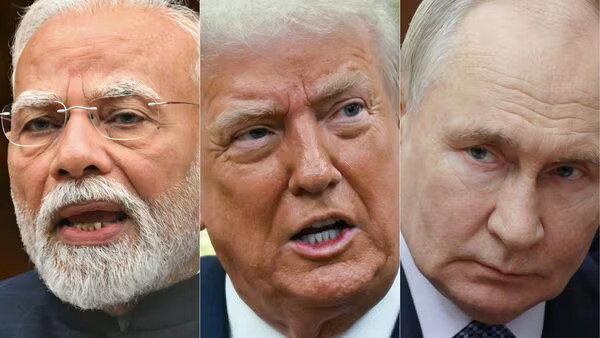
This response followed recent remarks by US President Donald Trump. He claimed that Prime Minister Narendra Modi agreed to reduce Russian oil purchases. He also said India would shift toward American and Venezuelan crude under a new trade understanding. However, Russian officials rejected this narrative.
First, Kremlin spokesperson Dmitry Peskov addressed the issue in Moscow. He said Russia never served as India’s only energy partner. He also noted that India has always sourced oil from multiple regions. Therefore, he called the current situation routine.
Moreover, Peskov said Moscow has received no official message from New Delhi. He repeated that position for the second day in a row. According to him, no Indian authority has signaled an end to Russian supplies.
Meanwhile, India continues to defend its energy strategy. Trade Minister Piyush Goyal recently explained the government’s approach. He said India keeps expanding its energy mix. He linked this policy to global uncertainty and domestic security. He also stressed the need to protect consumers from price shocks.
At the same time, Russia signaled interest in deeper cooperation. Foreign Ministry spokesperson Maria Zakharova spoke at a briefing. She said hydrocarbon trade benefits both countries. She also said it supports global market stability. Therefore, she expressed readiness for continued partnership.
In addition, Russian energy experts weighed in. Analyst Igor Yushkov from the National Energy Security Fund highlighted technical limits. He said US shale oil mainly consists of light grades. In contrast, Russia supplies heavier Urals crude. Indian refineries rely on this blend.
As a result, refiners cannot switch easily. Yushkov said India would need to mix US oil with other grades. This process raises costs. It also complicates operations. Hence, he ruled out simple replacement.
Furthermore, he pointed to supply volumes. Russia ships about 1.5 to 2 million barrels per day to India. The US lacks spare capacity at that scale. Therefore, he questioned Washington’s ability to fill the gap.
He also recalled events from 2022. After Western sanctions, Russia redirected exports to Asia. It cut production by nearly one million barrels per day. Consequently, global prices surged to around 120 dollars a barrel. Fuel prices in the US also hit record levels.
Meanwhile, trade tensions continue to shape policy. Last year, Trump imposed steep tariffs on Indian goods. He linked them to India’s energy ties with Russia. The White House argued that oil purchases supported Russia’s war effort in Ukraine.
Recently, however, Washington softened its stance. Trump announced a new trade deal. He reduced tariffs from 50 percent to 18 percent. The cuts took effect immediately. Markets welcomed the move.
Still, energy dependence remains a key issue. India imports nearly 88 percent of its crude. Until 2021, Russian oil made up only 0.2 percent of imports. After the Ukraine war, Western buyers stepped back. Consequently, India became the largest buyer of discounted Russian crude.
Latest data shows a slight decline. According to Kpler, imports fell to about 1.1 million barrels per day in early January. The figure stood at 1.21 million in December. It also dropped from over 2 million in mid-2025.
Overall, India continues to balance diplomacy, economics, and energy security. Russia supports that approach. Analysts see practical limits to rapid change. Therefore, despite political claims, oil flows appear set to follow market logic rather than pressure.