Virat Kohli reminds BCCI why India still leans on him in pressure chases
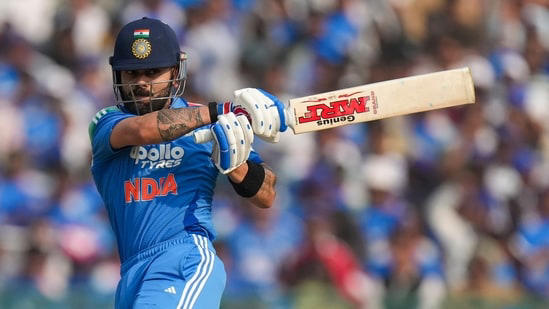
Virat Kohli’s future again dominates Indian cricket conversations. However, recent numbers dismiss most doubts. Across the last six ODIs, Kohli has delivered control and consistency. Therefore, speculation about his exit sounds premature. Instead, he looks firmly aligned with India’s plans for the 2027 World Cup.
India still searches for Kohli whenever a chase turns tense. Not because others lack skill, but because pressure demands decisions. The scoreboard constantly raises the stakes. Consequently, India trusts Kohli to read moments calmly and act with precision.
The Indore ODI against New Zealand offered the clearest proof. First, New Zealand built a strong total of 337 for 8. Daryl Mitchell and Glenn Phillips stitched a commanding 219-run partnership. That stand shifted momentum and raised the chase bar significantly.
India then began the pursuit under pressure. Early wickets rattled the batting order. The required rate climbed quickly. As a result, India needed stability and structure. Kohli stepped forward and anchored the innings.
He scored 124 off 108 balls. More importantly, he constructed the chase carefully. He rotated strike, chose gaps, and targeted loose deliveries. Meanwhile, he protected the innings during the middle overs, where most chases collapse. As long as he stayed, India looked competitive.
However, once Kohli departed, the chase unraveled. The batting lost direction. Partnerships broke. India fell for 296 in 46 overs and lost by 41 runs. Thus, the match highlighted not the century, but the collapse around it.
Chasing creates a unique mental battle. The scoreboard constantly reminds players of the gap. Every dot adds pressure. Every wicket inflates the rate. Therefore, teams require a batter who keeps the chase mathematically alive. Kohli masters this craft.
First, he keeps the innings breathing. He avoids stagnation through relentless singles. Even when bowlers restrict boundaries, he nudges the score forward. Consequently, he prevents panic from spreading.
Second, he strengthens partners. Kohli guides the non-striker with clarity and communication. He builds shared rhythm. As a result, teammates bat with greater confidence alongside him.
Third, he times acceleration wisely. Kohli does not attack blindly. Instead, he builds gradually and then shifts gears at calculated stages. That control transforms chases from chaos into plans.
Indore displayed all these traits. Kohli kept India alive despite setbacks. Yet the rest failed to sustain momentum. Therefore, the match exposed the gap between dependence and design.
India’s batting structure favors aggression. The top order often attacks early. That strategy works in many games. However, steep targets demand an anchor who absorbs pressure. Kohli alone fulfilled that role in Indore.
Lower-order contributions further underlined the pattern. Players fought briefly. Still, their efforts revolved around Kohli’s presence. Once he left, the chase spiraled.
India owns finishers and stroke-makers. However, the XI often lacks a second stabilizer under pressure. That role requires calm, game sense, and discipline together. Kohli repeatedly combines all three under intense scrutiny.
The takeaway from Indore remains uncomfortable yet clear. India cannot rely on one batter forever in crisis chases. The solution lies in preparation, not replacement. India must groom another anchor who steadies innings when pressure rises.
Until then, Kohli will remain India’s default saviour in run chases. Not by reputation, but by repeated proof under fire.