Pakistan’s Defence Minister Khawaja Asif hits out at Kabul, calls it ‘under Indian influence,’ warns of retaliation
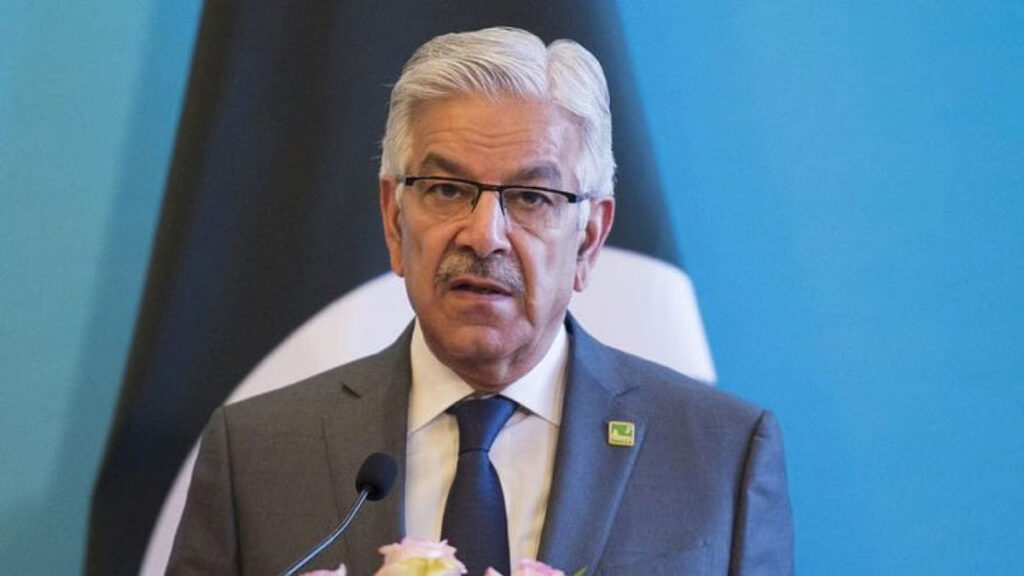
Islamabad– Pakistan’s Defence Minister Khawaja Asif accused Kabul of acting as India’s proxy and warned of a fierce retaliation if Afghanistan attacked Pakistan. Speaking on Geo News show Aaj Shahzeb Khanzada Ke Saath, Asif lashed out at Kabul’s leadership, calling it a “puppet regime” controlled by Delhi.
He alleged that India used Afghanistan to avenge its losses on the western border. “Those running the puppet show in Kabul are following Delhi’s orders,” Asif said. He claimed that India sought to engage Pakistan in a “low-intensity war” through Afghan territory.
Asif revealed that peace talks between Pakistan and Afghanistan in Turkey failed after several policy reversals from the Afghan side. “Each time we neared an agreement, Kabul’s intervention derailed it,” he said. He praised Afghan negotiators for their effort but accused Kabul’s power brokers of sabotaging progress under Indian influence.
The three-day talks, mediated by Turkey and Qatar, ended Monday without an agreement. Mediators called continued engagement a positive sign, but the deadlock remained over Pakistan’s demand for verifiable action against the Tehreek-i-Taliban Pakistan (TTP). Islamabad accused the TTP of operating freely from Afghan soil.
Asif issued a direct warning to Kabul after Afghan officials threatened retaliation. “If Afghanistan even looks toward Islamabad, we will gouge their eyes out,” he declared. “There is no doubt Kabul is behind the terrorism inside Pakistan.”
Earlier, Asif had cautioned that the collapse of peace efforts could trigger a full-scale war. His remarks come amid renewed tensions following deadly clashes along the border earlier this month.
Talks Collapse in Istanbul
Officials from both sides met in Istanbul from Saturday to Monday to ease tensions over cross-border military issues. Despite three days of dialogue, the two sides failed to finalize an agreement. According to Dawn, most points were mutually accepted, but they could not agree on a verification mechanism for action against terrorist networks inside Afghanistan.
Pakistan’s Information Minister Attaullah Tarar said the Istanbul talks aimed for a long-term truce but ended without any result. “The Afghan side kept avoiding the main issue and refused to take responsibility,” Tarar said in a statement. He added that the Taliban delegation “resorted to blame games and excuses” instead of addressing Pakistan’s concerns.
Both countries had agreed to a ceasefire in Doha on October 19, mediated by Qatar and Turkey. However, the second round of talks in Istanbul broke down as both sides traded accusations of betrayal.
Sources told Reuters that each government blamed the other for derailing negotiations. The collapse of talks has again strained relations, raising fears of escalation.
Earlier this month, violent border clashes killed dozens of soldiers and civilians. A brief truce restored calm, but mistrust continues to grow.
Asif’s sharp words on national television signal that Pakistan may soon abandon restraint if provocations persist from across the border.